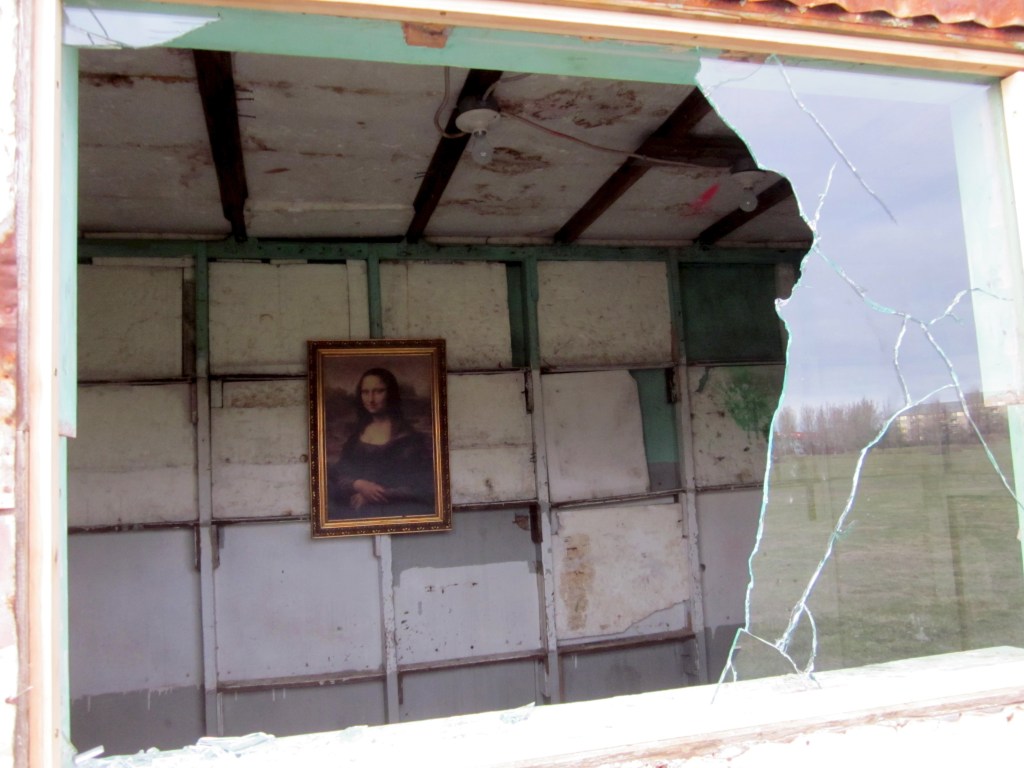
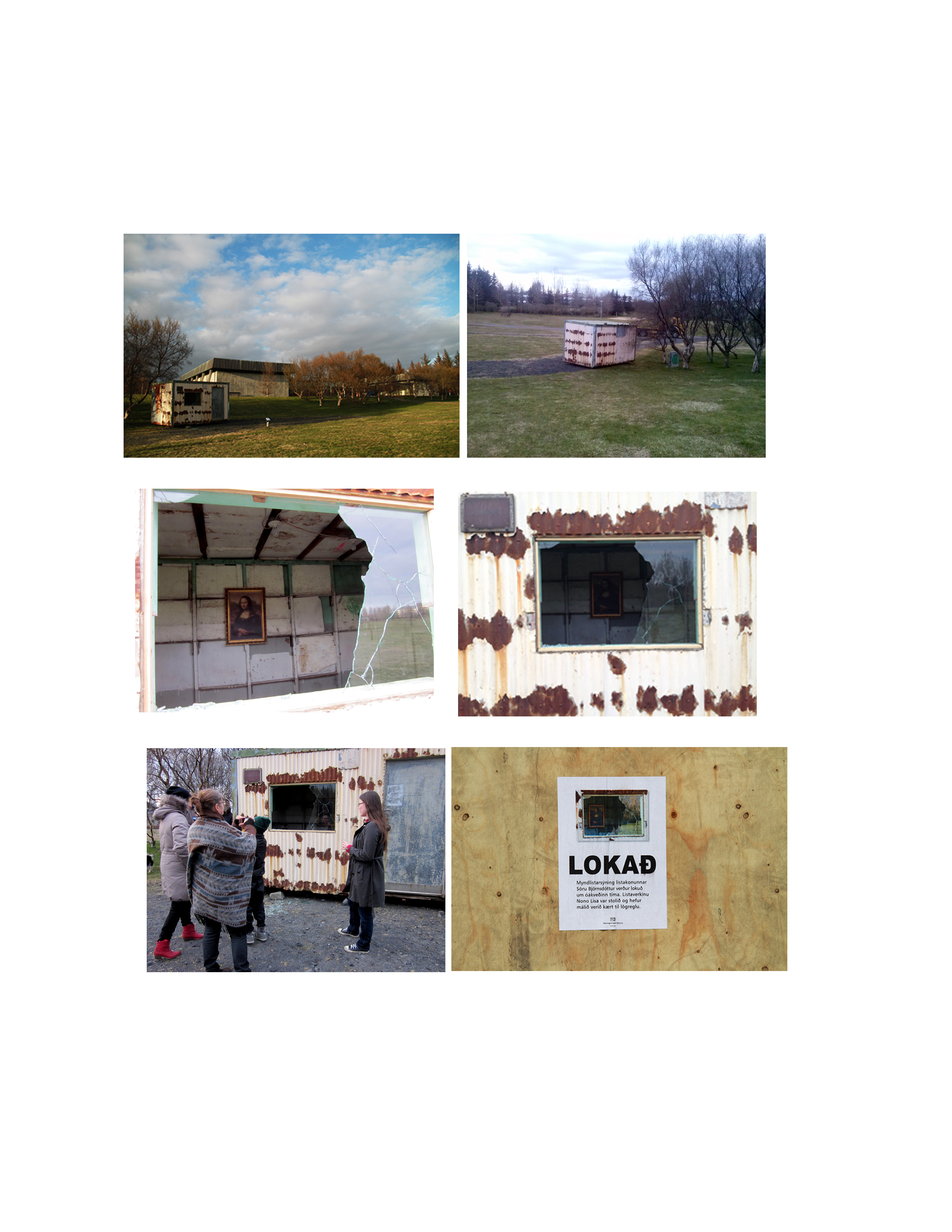
Nono Lisa was installed in The Hut, a container gallery run by a local artist. While the exhibitors usually chose the placement, I positioned it in the park outside Reykjavík Art Museum Kjarvalsstaðir. The work addressed vandalism and disrespect toward art in a broader context, with its location underscoring how art is both labor and practice—reflecting the dual role of artists who often balance wage work with creative production.
For the piece, I used a reproduction of the world’s most famous painting, the Mona Lisa, chosen both for its universal recognition and its history of theft and vandalism. Ironically, the events surrounding the exhibition mirrored the concept: the glass was smashed twice, and eventually the work itself was stolen. The “actual” exhibition lasted little more than a day; those who arrived later encountered only an empty hut with shards of glass on the floor.
The title Nono Lisa references the Mona Lisa while playing on absence and negation. The work reflects on artistic existence within Iceland’s small society, often unaware of broader cultural contexts, yet rich in creative energy and persistence. It also considers envy and cultural deficit: artistic envy as a destructive, unconscious force, and “cultural deprivation” as the tendency of society to undervalue or even resist the role of art.
Nono Lisa existed as both reproduction and original—a copy reliant on its prototype, yet becoming its own image, suspended between art history, local culture, and the precarious life of artworks in public space.

 Sara Björnsdóttir